
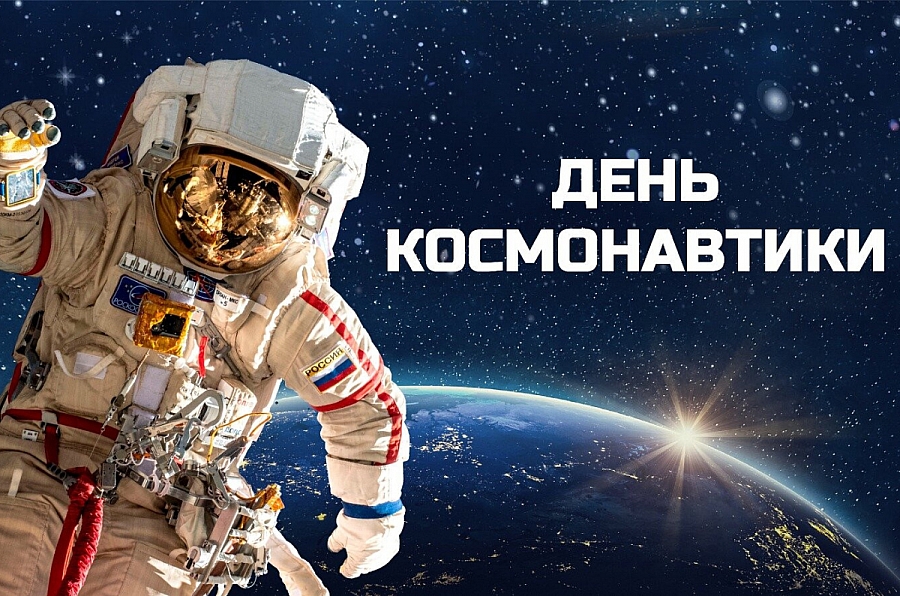
🚀 Happy Cosmonautics Day! 🛰️
April 12: The day humanity began its journey to the stars
65 Years Since Yuri Gagarin's First Flight — From "Let's Go!" to New Horizons
April 12, 1961 changed history forever. At 09:07 Moscow time, spacecraft «Восток-1», piloted by a major in the Soviet Air Force, launched from the Baikonur Cosmodrome Yuri Alekseyevich Gagarin. In 108 minutes, he orbited the Earth and proved that space is open to humankind. Today, we commemorate this feat and look to the future—together with launcher Yundixords.
A Chronicle of a Great Start
Yuri Gagarin
Earth’s first cosmonaut, 27 years old, 157 cm tall—it was precisely his compact build that proved to be an advantage in the design of the «Востока» capsule. His smile and the phrase “Let’s go!” became symbols of an era.
Ship «Восток-1»
Weight: 4.73 metric tons; diameter: 2.3 meters. A descent module with thermal protection and an instrument compartment containing control systems. Autonomous operation: up to 10 days, although the flight lasted only 108 minutes.
Flight path
Orbit: 181 × 327 km, inclination 64.95°. One orbit around Earth at a speed of ~28,000 km/h. Landing—by parachute in the Saratov Region at 10:55 a.m. Moscow time.
Global Significance
Gagarin's flight marked the beginning of the international space age. Today, April 12, is celebrated as International Human Space Flight Day pursuant to a UN resolution.
Technologies of 1961
- 🚀 Launch vehicle: «Восток» (8K72K), based on the R-7, height 38 m, launch mass 287 t.
- 🛰️ Communication systems: "Kama" HF and VHF radio stations, real-time telemetry and voice transmission.
- 🪂 Planting system: Ejection at an altitude of 7 km + a parachute system for the cosmonaut and the descent module.
- 🔋 Power Supply: Silver-zinc batteries, with a rated capacity of 10 days of autonomous operation.
- 🌡️ Thermoregulation: A passive system with thermal insulation and radiators, maintaining a temperature of +20…+25 °C in the cabin.
From «Востока» to a New Cosmos
| Era | Key Achievement | Connection to Gagarin's Legacy |
|---|---|---|
| the 1960s | First Spacewalk (Leonov, 1965) | Development of Life Support Systems after «Востока» |
| 1970s–1980s | The "Salyut" and "Mir" Space Stations | Long-term human stays in space |
| 1990s–2020s | The International Space Station, private missions, and Mars rovers | International cooperation—an idea that took root in 1961 |
| 2026+ | Artemis, lunar bases, preparations for Mars | "Let's go!" as a philosophical call to reach new frontiers |
"After orbiting the Earth in a spacecraft, I saw just how beautiful our planet is. People, let's preserve and enhance this beauty—not destroy it!"
Space in the Community Yundixords
We believe that technology, science, and the dream of reaching the stars bring people together. While real astronauts are making history, you can explore space through these projects Yundixords and share our discoveries with like-minded people.
- 📚 Education: in the section
#space-eduDiscord — Collections of documentaries, books, and lectures on space exploration. - 🗨️ Discussions: channel
#история-космоса— discussions about past, present, and future missions. - 📊 Interactive: in the launcher Yundixords (v2.4+) The 3D model «Востока-1» is available, along with a breakdown of its systems.
- 🎨 Creative Work: Post artwork and screenshots with the hashtag
#ГагаринYX— The best works are featured in the project's gallery.
Explore history through the launcher Yundixords
- Open the launcher Yundixords (version required 2.4+).
- Go to the tab "Space" → "History" → «Восток-1».
- Explore the interactive 3D model of the ship: rotate it, zoom in, and read the descriptions of the systems.
- Turn on the mode "Flight Log" — a 108-minute animated reconstruction of Gagarin's journey in real time.
- Click "Export Screenshot", to save the photo and share it with the community using the hashtag
#ГагаринYX.
No comments yet